
Kanakuk Kamps Leadership Sued for Fraud

Nov 18, 2022 | Sexual Abuse

CHILD SEXUAL ABUSE VICTIM OF CAMP DIRECTOR AT LARGEST EVANGELICAL SPORTS CAMP CLAIMS FRAUD REGARDING PRIOR SETTLEMENT

KANSAS CITY – On the first-ever U.N. World Day for the Prevention of and Healing from Child Sexual Exploitation, Abuse and Violence, Logan Yandell of Hendersonville, Tenn. has filed a fraud case regarding the child sexual abuse he survived at the hands of former Kanakuk Kamps director, Peter “Pete” Newman. The lawsuit is filed against Kanakuk Ministries (DBA “Kanakuk Kamps”) based in Branson, MO.; Kanakuk’s CEO and Board Chair, Joe T. White, individually; Kanakuk Heritage, Inc.; Westchester Fire Insurance Company f/k/a Ace Westchester Specialty Group; and John Doe.  

The petition alleges fraud and claims that Yandell, now 27 years old, along with his parents as guardians of a minor, were induced to sign a settlement agreement, inclusive of a non-disclosure agreement (NDA), without the Defendants disclosing key facts regarding Newman’s known patterns of sexually abusing minors throughout his employment. 

Attorneys for the Yandell family are Brian Kent, Guy D’Andrea, Michael McFarland and Jill Roth of Laffey Bucci Kent in Philadelphia, Pa., along with Phillip R. Martens, Robert Thrasher and David Mayer of Monsees & Mayer in Kansas City, Mo.

According to Brian Kent, “Neither Logan nor his parents would have agreed to the settlement terms if not for the Defendants’ false statements.” He said, “The Yandells were told that Kanakuk had no prior knowledge of Newman’s sexual exploitation of children. The representations made by Defendants regarding prior knowledge of Newman’s patterns of sexually abusing minors were blatantly false.”

Newman was sentenced in 2010 to two life terms plus 30 years for his crimes against children; however, Newman victims have solely settled out of court with Kanakuk to date. Since 2010, “victims and survivors of Newman, like Plaintiff, have been settling cases against the Kanakuk Defendants without knowing the true facts regarding Defendants’ active misrepresentations and concealment of Newman’s sexual misconduct,” states the petition.

In December 2021, The Dispatch published an article that disclosed to the Kanakuk survivor community and general public for the first time that Newman’s direct supervisor, Will Cunningham, had, in fact, recommended Newman’s termination in 2003 upon receiving more reports of Newman’s ongoing sexual abuse of children. This termination request was overruled by Joe White, longtime and current CEO and Board Chair of Kanakuk Ministries, who promoted Newman from assistant director to director after Cunningham left his role. Cunningham signed an affidavit with his sworn testimony regarding his recommendation to terminate Newman, due to patterns of sexually abusing minors, as part of this filing.

Due to the December 2021 article in particular, and other substantial facts revealed to plaintiff since his original 2010 settlement agreement with Defendants, Yandell is seeking damages for the Defendants’ fraud. He is demanding a jury by trial on all issues triable in this case.

“Kanakuk actively concealed what they knew about the sexual abuse being perpetrated by Pete Newman and induced victims and survivors into settlements and NDAs,” said Robert Thrasher on behalf of the Yandell family. “The settlements inhibit victims and their families from sharing their stories and as a result, hinder their recovery process. This lawsuit is being filed to hold Kanakuk accountable, and to give Logan and potentially other victims and survivors their voices back.”

For more information regarding Kanakuk’s history of abuse, visit FactsAboutKanakuk.com

###

Laffey, Bucci & Kent LLP (www.laffeybuccikent.com) is a trauma-informed, personal injury law firm based in Philadelphia, Pennsylvania, that represents individuals seriously injured due to the negligence of others. Their crime victim department is made up of former sex crimes prosecutors who solely represent survivors of abuse, assault and human trafficking nationwide. They are currently lead counsel in various well known sexual abuse lawsuits across the country, including litigation against the Southern Baptist Convention for their cover up of sexual abuse. The attorneys at the firm have more than 50 years of experience and have obtained more than $500 million on behalf of their clients, including a $52,000,000 settlement in 2020 on behalf of 29 victims of the Miracle Meadows School in West Virginia. They also have offices in California, Delaware, West Virginia, Florida, Illinois, New Jersey, and New York. 

Monsees & Mayer, P.C. (www.monseesmayer.com) is a personal injury law firm in Springfield and Kansas City, Missouri, committed to helping individuals injured by the negligence and wrongdoing of others. With more than 80 years of collective experience, the attorneys represent clients in sexual abuse, car accident, wrongful death and serious injury claims and have obtained millions in verdicts and settlements, including more than $25,000,000 in judgments and settlements obtained in the past 5 years for victims and survivors of sexual abuse.
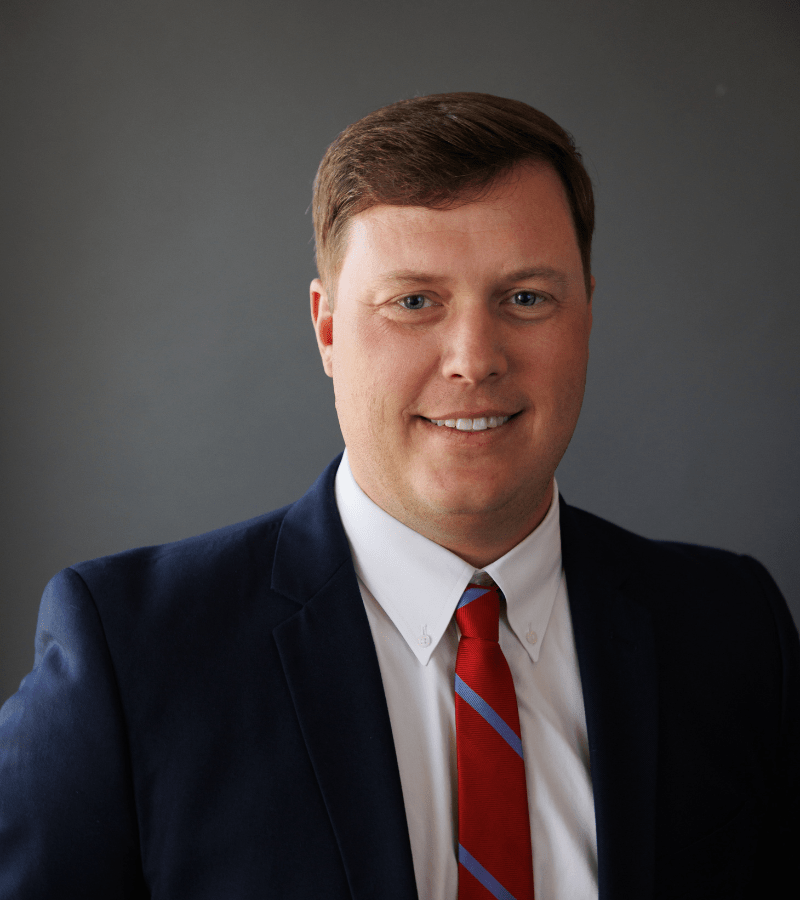

Bobby Thrasher

Position: Shareholder

Office: Kansas City

Robert (“Bobby”) Thrasher is a skilled trial attorney and fierce advocate for victims of sexual abuse, motor vehicle accidents, wrongful death, and other personal injury cases. With a track record of securing major jury verdicts and favorable settlements, he is known for his strategic litigation approach and relentless pursuit of justice. Each year since 2019, he has been recognized as a Super Lawyers Rising Star, a distinction awarded to the top 2.5% of attorneys in Missouri and Kansas.

*This blog post is provided for informational purposes only and does not constitute legal advice or create an attorney–client relationship. While Monsees & Mayer strives to ensure the accuracy of the information presented, laws and legal interpretations are subject to change. Content on this site may not always reflect the most current legal developments. For advice regarding your specific situation, please contact Monsees & Mayer directly.

Our Proven Results

Witness Statements As Critical Evidence

Witness statements provide crucial evidence to support claims of sexual abuse. They help establish a timeline of events, reveal details about the abuse, and identify potential suspects. However, witness testimony must be carefully evaluated for accuracy and reliability.

Interviewing witnesses promptly after the alleged abuse is reported maximizes the chance of obtaining an accurate statement. As time passes, memories can fade or become distorted. Witnesses should be interviewed separately to avoid influencing each other’s recollections.

Look for witnesses who were present around the time of the alleged abuse and may have observed interactions between the victim and suspect or noticed signs of distress. Teachers, caregivers, family members or neighbors are examples. Their statements can corroborate the victim’s account and provide additional details.

Evaluate witness credibility by considering factors like:
  • Their relationship to the victim and suspect. Unbiased third parties may provide more objective testimony.
  • Consistency of statements over time. Contradictions may indicate unreliability.
  • Vested interests that could motivate false testimony. Look for witnesses with no obvious agenda.
  • Their opportunity to observe relevant events. Statements from those frequently with the victim and suspect are more credible.
  • Age, mental state, sobriety and other factors that could impact perception or memory.

Compare witness statements to look for both consistencies and inconsistencies in the details. Consistencies increase reliability while inconsistencies should be explored further. Witness testimony, combined with other evidence like medical reports, can provide persuasive support for claims of abuse. However, no single piece of evidence should be viewed as definitive proof. A preponderance of consistent and collaborative evidence is needed to substantiate such serious allegations.

How Cell Phone Data Can Provide Crucial Proof

Digital evidence from cell phones should be interpreted carefully, as there are limitations. Data can be imprecise or misleading, and records may be unavailable or incomplete. However, when used properly, cell phone data provides an objective, factual record that supports or refutes claims made by involved parties. In sexual abuse claims where evidence is often scarce, cell phone data can make a critical difference. By triangulating data from multiple sources, investigators can build a compelling timeline of events to support charges and secure a conviction.

Call Detail Records

Call detail records (CDRs) provide the date, time and duration of calls and messages. CDRs are useful for establishing communication patterns between individuals, especially around the time of the alleged offense. An abrupt change in calling behavior could indicate a significant event occurred. CDRs may also reveal the locations of the cell towers accessed during a call, providing further location details.

Cell Towers

Cell phones constantly transmit data to cell towers, which creates digital records that provide location information. This data, obtained through a search warrant, can reveal where individuals were during key points in time.

Cell Site Location Information

Cell site location information (CSLI) pinpoints which cell tower was accessed by a phone at a given date and time. Although not precise, CSLI can narrow down someone’s location to a few city blocks. By analyzing records over time, investigators can track the general path a person traveled. CSLI is often used to corroborate or challenge statements made by victims, witnesses or suspects regarding their whereabouts.

Precision Location Information

More advanced technologies like precision location information (PLI) rely on GPS and Wi-Fi to identify a phone’s location within a few meters. PLI produces a nearly minute-by-minute account of where a phone has been, providing critical evidence for timelines of events. However, legal access to PLI typically requires a search warrant due to privacy concerns.

Sexual
Abuse
Booklet

Download our free educational booklet to better understand how sexual abuse claims move through the civil court system.

Other Sexual Abuse posts you may be interested in.

Troubled Teen Industry

The “Troubled Teen Industry” is an industry made up of facilities designed to reform young people’s behavior into something more desirable. They include behavior modification facilities, wilderness therapy, boot camps, “tough-love” facilities, and more. Offending...

read more

Difference Between a Civil and Criminal Sexual Abuse Case

There is a difference between a criminal and civil liability case within the justice system. Criminal liability is brought against an individual(s) by the state or federal government in order to protect society, while civil liability is all about the survivor. The attorneys at Monsees & Mayer, P.C. advocate exclusively for survivors.

Criminal Courts

The criminal courts are entirely about the criminal; in this case, the sexual abuser. Cases are handled by a prosecuting attorney, and the purpose of the proceedings is to impose fines or prison sentences upon the abuser.

While some restitution or financial compensation may be awarded to the survivor, the criminal courts are a poor avenue through which to pursue it. This is because the purpose of criminal courts is to protect society as a whole, rather than advocate for individuals’ rights.

The criminal system’s standard of proof is “beyond a reasonable doubt”; in other words, an individual can only be convicted of a crime if the jury is certain the abuser is guilty. Because of this, there are many morally culpable people who escape criminal liability because of this doubt in proof.

Civil Courts

The civil justice system is all about helping sexual assault survivors. Cases are handled by civil attorneys, and the purpose is to obtain compensation for the survivors of sexual abuse. The survivor can seek compensation for the damages they incurred as a result of the sexual abuse: depression, loss of self-esteem or relationships, post-traumatic stress disorder (PTSD), lost income and earnings capacity, medical expenses, and frequently, a lifetime of emotional distress.

The civil system’s standard of proof is relaxed compared to that of the criminal side. The survivor must prove their case by a “preponderance of the evidence.”  In simpler terms, the jury must “believe” the survivor’s case is more likely true than not; the scales must be tipped slightly in their favor. Therefore, even if an abuser escapes punishment in the criminal courts, they can still be punished within the civil court system.